
How to Wash and Care for Vintage Football Shirts
Vintage football shirts are more than just clothing. They carry memories of players, clubs, seasons and moments in football history. Whether you wear your shirts regularly or keep them as part of a collection, taking proper care of them helps preserve their condition for years to come.
Unlike modern everyday clothing, older football shirts can have delicate fabrics, ageing sponsor prints, namesets and badges that require extra attention. Even a single incorrect wash can cause damage that cannot easily be reversed.
At Pardon My Kicks, we believe original football shirts deserve to be preserved. If you're building your collection, you can explore our vintage football shirts, featuring original pieces from clubs and national teams across different eras.
Here is our guide to washing, drying, ironing and storing your football shirts safely.
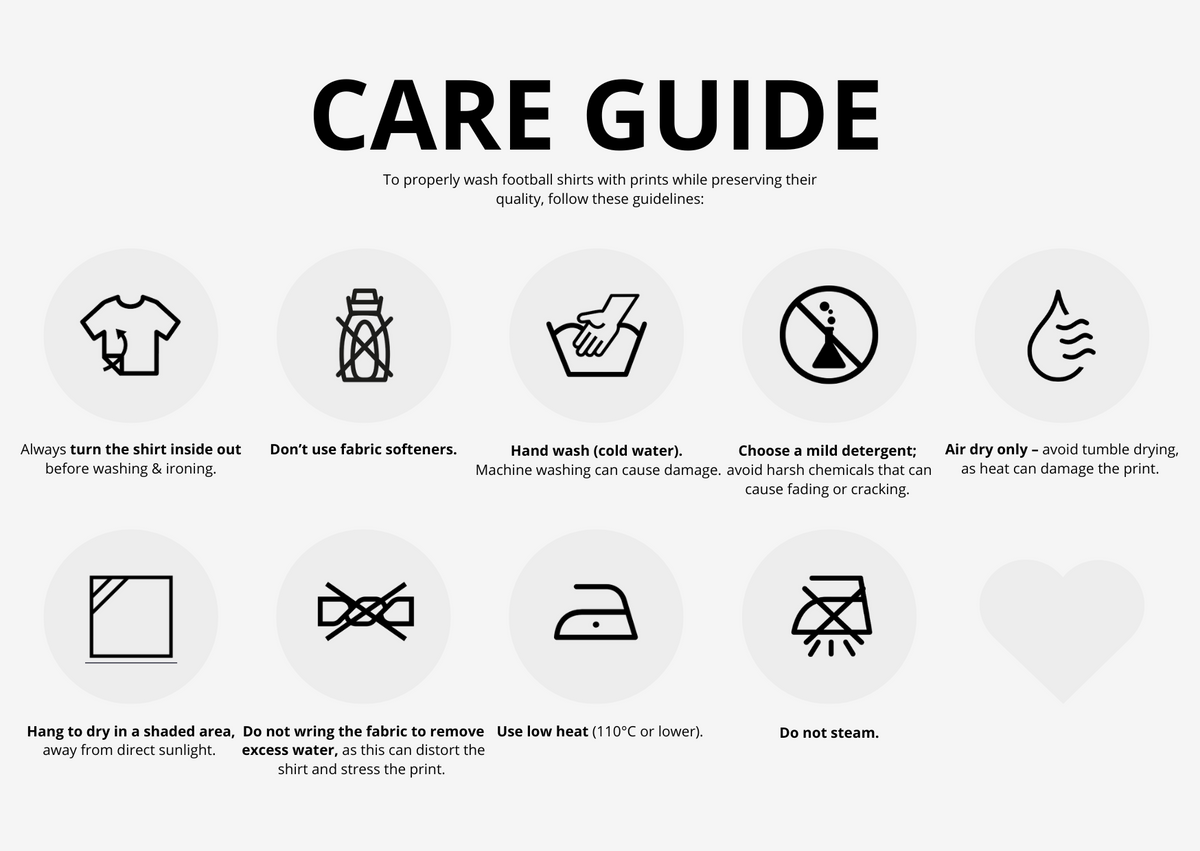
1. Always Turn Your Football Shirt Inside Out
Before washing your football shirt, turn it inside out.
This helps reduce direct friction against sponsors, namesets, numbers and badges during cleaning. These details can be particularly sensitive on vintage shirts, where years of ageing may have weakened the original printing.
The same principle applies when ironing: keep printed details protected and avoid direct contact with the iron.
2. Never Use Fabric Softener
Avoid using fabric softeners when washing football shirts.
Fabric softeners can leave residues on synthetic materials and may affect the properties of performance fabrics. They are also unnecessary when cleaning delicate vintage shirts.
A mild detergent is generally a better choice.
3. Hand Wash in Cold Water
Hand washing in cold water is our recommended method for cleaning vintage football shirts.
Fill a clean basin with cold water and add a small amount of mild detergent. Gently move the shirt through the water without scrubbing or stretching the fabric.
Pay particular attention to areas with sponsors, namesets and other applied prints. Avoid rubbing these surfaces directly.
Machine washing can expose shirts to friction and mechanical stress that may damage ageing prints and delicate materials.
For particularly fragile or valuable shirts, assess their condition before introducing water. Some older prints and fabrics may already be too delicate for ordinary washing.
4. Choose a Mild Detergent
Harsh detergents and chemicals can damage fabrics, affect colours and contribute to deterioration of printed details.
Choose a mild detergent and avoid bleach, strong stain removers or aggressive cleaning products.
Use only a small amount of detergent and rinse the shirt gently with cold water until the residue is removed.
If a shirt has a particular stain, avoid experimenting with strong chemicals. An incorrect treatment can cause more damage than the original stain.
5. Air Dry Only
After washing, allow your football shirt to air dry naturally.
Avoid tumble drying. Heat and mechanical movement can damage delicate prints, cause shrinkage in certain materials and accelerate deterioration.
Instead, allow the shirt to dry in a well-ventilated area.
For fragile or water-heavy shirts, support the garment while drying so that its weight does not stretch the fabric.
6. Keep Shirts Away From Direct Sunlight
Dry your football shirts in a shaded area rather than direct sunlight.
Prolonged exposure to sunlight can contribute to colour fading and deterioration of certain materials.
This is especially important for older shirts with bright colours, printed sponsors or delicate namesets.
The same advice applies to long-term storage and display.
7. Never Wring Out a Football Shirt
Avoid twisting or wringing your football shirt to remove excess water.
This places unnecessary stress on the fabric and can damage sponsors, namesets and other applied details.
Instead, gently press out excess water without twisting the garment.
You can also place the shirt between clean towels and carefully press to absorb moisture.
8. Be Extremely Careful When Ironing
Heat can permanently damage football shirt prints.
If ironing is necessary, first check the garment's care label and the condition of its materials. Your existing care guidance recommends a low setting of 110°C or below.
Always turn the shirt inside out and avoid direct ironing over sponsors, namesets, numbers or badges.
For particularly old or delicate vintage shirts, avoiding ironing altogether is often the safer option.
9. Do Not Steam Your Football Shirt
Avoid steaming vintage football shirts, particularly those with applied printing.
Heat and moisture can affect ageing adhesives and printed surfaces, potentially causing peeling, lifting or other damage.
If a shirt is creased, careful storage and gentle handling are preferable to exposing delicate prints to steam.
How to Store Vintage Football Shirts
Washing is only one part of caring for a collection. Proper storage can be equally important, particularly for shirts that are worn infrequently.
Store Shirts in a Cool, Dry Environment
Avoid storing football shirts in damp spaces or areas exposed to significant temperature changes.
Excessive humidity can encourage unwanted odours and deterioration, while prolonged heat may affect some printed details.
Protect Shirts From Sunlight
Keep your collection away from prolonged direct sunlight.
If you display a shirt, consider its exposure to natural light and periodically inspect the fabric and printing.
Fold Delicate Shirts Carefully
For long-term storage, carefully folding fragile vintage shirts may be preferable to hanging them for extended periods.
Avoid placing heavy objects on top of printed sponsors or namesets.
Where necessary, use suitable acid-free tissue paper to help separate delicate printed surfaces and reduce unwanted contact.
Inspect Your Collection Occasionally
Even shirts that are rarely worn can change over time.
Check your collection occasionally for developing print damage, moisture, discolouration or other signs of deterioration.
Identifying issues early can help prevent additional damage.
Can You Machine Wash a Vintage Football Shirt?
Although some football shirts have care labels permitting machine washing, we recommend hand washing vintage shirts whenever cleaning is necessary.
Older shirts may have weakened prints, ageing adhesives or delicate materials that are not obvious at first glance.
A machine wash that causes no damage to one shirt may affect another differently, even when both were produced by the same manufacturer.
If a shirt has significant historical or collector value, consider whether washing is necessary at all.
How Often Should You Wash Vintage Football Shirts?
There is no universal washing schedule.
A shirt worn regularly may require more frequent cleaning than one kept primarily for collecting.
However, unnecessary washing exposes fabrics and prints to additional wear.
For collector pieces that are rarely worn, careful storage and occasional inspection may be more appropriate than routine washing.
If a shirt is worn and becomes sweaty or dirty, address the issue promptly rather than leaving moisture or contamination in the fabric for extended periods.
Frequently Asked Questions
What Is the Safest Way to Wash a Vintage Football Shirt?
Our recommended approach is gentle hand washing in cold water with a small amount of mild detergent, provided the shirt's materials and prints are stable enough to be washed.
Can I Put a Football Shirt in the Washing Machine?
Some manufacturers permit machine washing, but we recommend avoiding it for vintage shirts because of the potential damage to older prints and materials.
Can I Tumble Dry a Football Shirt?
We recommend air drying only. Tumble drying exposes the shirt to heat and mechanical movement that may damage fabrics and prints.
Can I Iron a Football Shirt With a Nameset?
Avoid direct ironing over namesets or other printed details. If ironing is necessary and the care label permits it, use a low temperature and keep the shirt inside out.
How Do I Prevent Football Shirt Sponsors From Cracking?
Gentle washing, avoiding excessive heat, minimising friction and careful storage can help reduce additional wear. However, existing cracking and age-related deterioration cannot always be prevented.
Should I Wash a Match-Worn Football Shirt?
If a shirt has documented match-worn provenance or significant collector value, cleaning may affect its historical condition or associated evidence. Consider specialist conservation advice before washing it.
Preserve the Shirts. Preserve the Memories.
Every vintage football shirt has its own history. The fabrics, colours, badges and prints are part of what makes an original shirt special.
With gentle washing, careful drying and proper storage, you can help preserve those details and enjoy your collection for years to come.
At Pardon My Kicks, we specialise in original football shirts from different eras of the game.


Leave a comment
This site is protected by hCaptcha and the hCaptcha Privacy Policy and Terms of Service apply.